
Key Takeaways
- Warehouse capacity is about usable flow, not simply the amount of empty floor space.
- Accurate receiving and fast putaway prevent dock congestion from affecting later work.
- Storage locations should reflect item velocity, size, handling requirements, and seasonality.
- Clear standards, reliable data, and practical metrics help teams find bottlenecks early.
- Phoenix operations need flexible plans for seasonal volume fluctuations, transportation delays, and extreme heat.
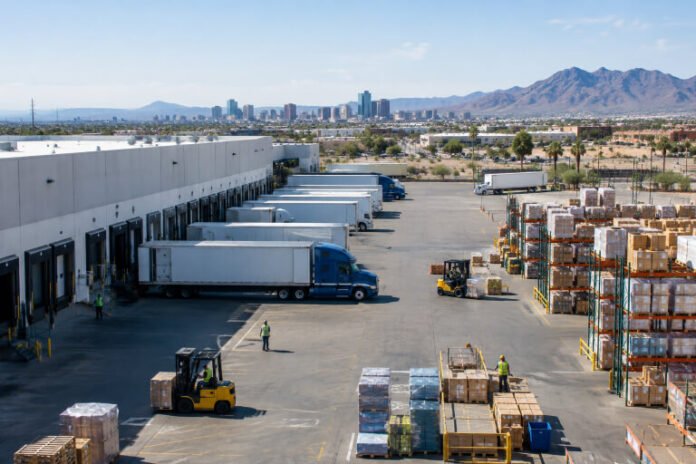
For Phoenix businesses, keeping inventory moving means balancing customer expectations with the practical limits of dock doors, labor, equipment, staging areas, and storage locations. A well-run Warehouse Phoenix AZ operation should ensure each handoff is clear, from an inbound trailer arriving at the dock to an outbound order leaving for its next destination.
Phoenix warehouses also operate in a desert environment where summer heat can affect employee comfort, equipment routines, loading schedules, and the urgency of getting heat-sensitive goods out of exposed staging areas. The answer is not to fill every open corner with product. It is to create a predictable system that keeps goods, people, and equipment moving safely.
Why Capacity Is Under Pressure
Capacity becomes tight long before a building appears completely full. Product can accumulate in receiving lanes, pallets can linger in temporary locations, and pick faces can run short while reserve storage holds the wrong mix of goods. The June 2026 Logistics Managers’ Index reported an overall reading of 71.1, reflecting strong expansion in logistics activity and the pressure that higher inventory and utilization can place on warehouse networks.
What Warehouse Flow Means
Warehouse flow is the connected movement of products, information, workers, and material-handling equipment through receiving, inspection, putaway, replenishment, picking, packing, staging, loading, and dispatch. When receiving is backed up, accepted goods may not be available in the system or at the right location. Pickers then spend time searching, replenishment falls behind, and shipping teams inherit a delay they did not create.
Companies that need additional space or operational support should evaluate third party warehousing companies based on their ability to provide accurate inventory control, defined handling procedures, and capacity that fits the business’s actual product flow.
Fix Receiving Before It Creates Delays
Receiving is a control point, not just an unloading task. Schedule inbound appointments when possible, compare deliveries against purchase orders before unloading, and inspect counts, labels, packaging, visible damage, lot numbers, and date-sensitive goods. Accepted product should move promptly from the dock to a confirmed staging or storage location.
A Simple Dock-to-Stock Checklist
- Confirm the expected shipment and available dock space before arrival.
- Assign a temporary receiving location for goods awaiting inspection.
- Scan or record each accepted item before it leaves the receiving area.
- Escalate shortages, damage, and labeling problems immediately.
- Set a clear putaway deadline so the docks do not become overflow storage.
A receiving error can become an inventory-record error, a picking error, and ultimately a customer-service problem. Fast work only helps when it is also traceable and accurate.
Build a Layout Around Product Movement
Warehouse layouts should support the routes that the inventory actually follows. Place frequently picked products near common picking and shipping paths, while slower-moving goods can be placed in less convenient but still accessible locations. Keep enough room for replenishment, pallet turns, dock staging, and safe traffic flow.
Map a typical order from receiving through shipping, then compare that planned route with where employees and forklifts actually travel. Repeated detours, blocked aisles, and products staged far from their next task are signs that the layout needs adjustment. Separate people from equipment whenever possible. OSHA notes that employers should separate forklift and pedestrian traffic with walkways, barriers, markings, or other appropriate controls where possible.
Match Storage Rules To Inventory Behavior
A single storage rule rarely serves every SKU. Fast-moving products belong in easy-to-reach pick positions. Slow-moving items should not occupy prime locations. Large or heavy goods require positions that allow safe access to equipment, and date-sensitive inventory requires clear rotation rules.
Seasonal products deserve a separate plan. For example, an item that sells steadily during most of the year may require forward pick space and nearby reserve stock before its peak period. After demand settles, move it back out of priority space rather than allowing a temporary setup to become permanent congestion.
Improve Visibility With Technology
Technology should solve a specific operating problem. Barcode scanning, warehouse management systems, mobile devices, and basic reporting can record inventory movements, distinguish available stock from allocated stock, and identify exceptions sooner. Even a straightforward process becomes stronger when the system shows where an item was last scanned and what task should happen next.
Advanced automation may be useful in some facilities, but it is not a substitute for disciplined location control. Start with reliable master data, readable labels, consistent scans, and exception procedures that workers can follow during a busy shift.
Set Clear Work Standards
Clear work standards help warehouse teams maintain quality when volume rises. Document the basic steps for receiving, putaway, replenishment, picking, packing, loading, and handling exceptions. Use consistent location codes and labels, train employees on equipment and safety practices, and give supervisors a direct way to report recurring obstacles.
Speed should never override safe movement or order accuracy. A rushed process that produces frequent mispicks, damage, or rework adds cost and consumes capacity later in the day.
Measure Real Progress
Use a balanced set of metrics rather than relying on a single productivity figure. Review trends in dock-to-stock time, inventory-record accuracy, picking accuracy, on-time shipment rate, order cycle time, damage rates, rework, space utilization, and lines picked per labor hour.
High space utilization is not automatically a success. If full locations make replenishment difficult, block travel lanes, or force workers to search for inventory, the warehouse may be less usable despite appearing efficient.
Prepare for Peaks, Delays, and Extra Stock
Flexible capacity planning protects day-to-day operations when demand or supply changes. Identify temporary overflow locations before they are needed, define rules for aged and excess inventory, coordinate inbound appointments with available storage, and review labor needs ahead of seasonal peaks. When a shipment is already assigned to an outbound customer order, cross-docking or direct transfer may reduce unnecessary storage and handling.
After a peak period, review what worked and remove temporary workarounds that no longer serve the operation. The strongest Phoenix warehouse plans do not chase speed alone. They connect safety, accuracy, space, labor, and customer service so inventory can keep moving with less friction.