
Key Takeaways
- Credit scores are built from information in credit reports, and the score shown can vary by bureau and scoring model.
- Payment history, card balances, account age, credit mix, and recent applications can all influence a score.
- Checking your own report generally does not lower your score, but applying for credit can result in a hard inquiry.
- Scores can shift when lenders report updated balances or account information, even if you did not open a new account.
- Consistent habits, including on-time payments and manageable balances, are more useful than short-term score tricks.
What a Credit Score Measures
A credit score is a number designed to help lenders assess risk using information from your credit report. Credit card issuers, mortgage lenders, auto lenders, and other creditors may use it as one part of an application review. It is not a measure of your character, savings account balance, or overall financial value.
Your credit report is the underlying record. It can include accounts, balances, payment history, inquiries, and public information that is eligible to be reported. Your score is a calculation based on that data. Two people with similar incomes can have very different scores if one has a long record of on-time payments and the other has high card balances or recent late payments.
Why Credit Scores Can Differ
There is no single credit score that every lender sees. A lender may use a different scoring company, model version, or credit bureau than the score displayed in your bank app. The broader history and structure of credit scoring in the United States help explain why several scores may exist for the same consumer at one time.
Differences do not automatically mean that one score is wrong. Credit bureaus may hold somewhat different information, and scoring models weigh that information differently. Before a major application, ask the lender which bureau and score model it expects to use when that information is available.
The Main Factors That Can Move a Score
Payment History
Paying accounts on time is one of the clearest signs that you manage credit as agreed. A late payment can have a different effect depending on how late it is, how recently it happened, and what else appears in your file. Set automatic payments for at least the minimum due, then use reminders to confirm the payment account has enough funds.
Credit Utilization
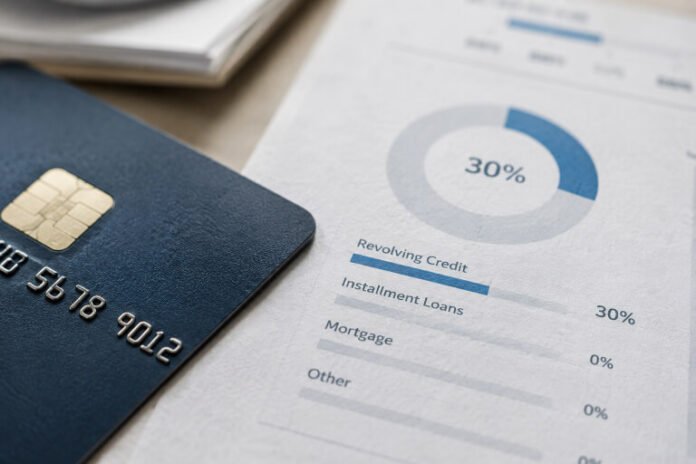
Credit utilization compares revolving balances with available credit limits. For example, a card with a $1,000 limit and a $300 reported balance has 30 percent utilization. Both total utilization across cards and the balance on an individual card can matter. A balance may be reported around a statement date, so paying in full by the due date does not always mean a zero balance was reported.
Length of Credit History
Older accounts can give a scoring model more history to evaluate. Closing an unused card is not always harmful, but it can reduce your available credit and raise utilization if you carry balances elsewhere. Account age is important, but it is only one part of the complete picture.
Credit Mix
Revolving credit, such as credit cards, lets you borrow up to a limit and repay over time. Installment credit, such as an auto loan, generally has a fixed payment schedule. A varied history may be useful to some models, but opening a loan only to create a better mix can add interest, fees, and unnecessary debt.
Recent Credit Applications
Applying for a new card or loan can create a hard inquiry. A soft inquiry, such as checking your own report, generally does not affect your score. Multiple applications in a short period can concern lenders, although some models treat closely timed mortgage, auto loan, or student loan inquiries differently for rate-shopping purposes.
What Usually Does Not Affect a Score
Several details may matter to a lender without being direct inputs in a traditional credit score. Income, employment, bank balances, marital status, and age are not typically listed as standard score factors. Paying cash also does not usually create a positive credit account because there is no borrowing activity to report.
- Myth: Checking your own credit always lowers your score. Fact: Personal checks are generally soft inquiries.
- Myth: A high income guarantees a high score. Fact: Scores primarily reflect credit-report information, not salary.
- Myth: Carrying a balance is necessary. Fact: Interest charges are not required to build a payment record.
Why Scores Change From Month to Month
Creditors report information on their own schedules. A higher reported card balance may temporarily lower a score, while a later update can show a lower balance. New accounts, closed accounts, corrected errors, late payments, and changes to available credit can also affect the result.
For example, you might pay a card in full by its due date, but the issuer may have already reported the statement balance before that payment posted. That does not mean you paid late. It means the score was calculated using the balance available when the report was updated.
How to Review a Credit Report
Start by getting reports from the official free credit report source for the nationwide credit bureaus. Review your name, addresses, accounts, credit limits, balances, payment status, and inquiries. Look for unfamiliar accounts, duplicate entries, or information that should no longer appear.
If you find an error, dispute it with the credit bureau and the company that provided the information. Keep copies of your documents, record the dates you submitted materials, and follow up on the results. Accurate reports are the foundation of an accurate score.
A Simple Credit Checkup Plan
Monthly Tasks
- Review card balances before statement closing dates.
- Confirm automatic payments are active and funded.
- Check account activity for unfamiliar transactions.
Quarterly Tasks
- Review credit reports for errors or unexpected changes.
- Watch whether revolving balances are increasing faster than planned.
- Pause before submitting several new credit applications.
Before a Major Application
- Review reports several months in advance when possible.
- Reduce revolving balances without exhausting emergency savings.
- Avoid opening unnecessary accounts.
- Compare total borrowing costs, not just approval odds.
Common Questions About Credit Scores
How fast can a score change? It can change after a creditor reports new information, but reporting schedules vary. Does paying off a card always raise a score? It may help utilization, but the result depends on the rest of the report and the model used. Is a perfect score necessary? No. Lenders also consider factors such as income, debt obligations, loan terms, and their own approval standards.
A credit score responds to patterns rather than one isolated action. Keep reports accurate, pay on time, use available credit thoughtfully, and apply for new credit with a clear purpose. A regular checkup can make your score easier to understand and less stressful to manage throughout 2026.