
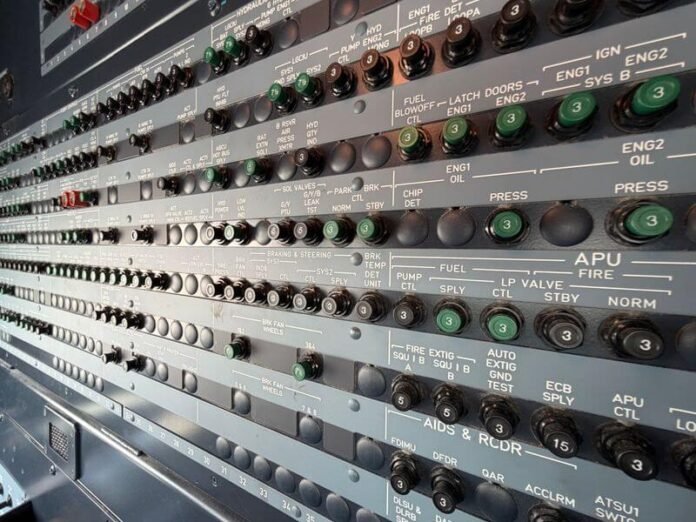
If you’ve ever opened up a gadget and seen a tiny switch doing a big job, you already know one truth: small components can carry serious responsibility. In military and defense systems, that responsibility gets a lot heavier. Equipment used in aircraft, naval systems, ground vehicles, and field communications has to work under pressure, often literally. A failed switch isn’t just annoying. It can interrupt missions, disable equipment, or create dangerous gaps in system control.
Built for conditions that would wreck ordinary switches
A standard commercial switch usually lives a fairly comfortable life. It may deal with office dust, light vibration, and predictable temperatures. Military and defense switches don’t get that luxury.
They’re often expected to perform in harsh environments that include shock, vibration, salt exposure, moisture, sand, and extreme heat or cold. A switch inside a tactical vehicle, for example, may face constant movement over rough terrain. One inside a naval system might deal with corrosion risks that would make ordinary hardware give up early.
That’s where companies like Select Controls come into the picture, offering military and defense switches designed for those tougher use cases. In this space, durability isn’t a nice extra. It’s part of the job description.
Reliability matters more when failure carries real consequences
In consumer products, a faulty switch can be frustrating. In defense systems, it can become a mission problem fast. That difference changes how these components are designed, tested, and selected.
Military-grade switches are expected to deliver repeatable performance over long operating cycles, often in systems where there’s no easy reset button and no time for troubleshooting. Think of cockpit controls, communication panels, weapons systems interfaces, or power distribution units. Each one depends on clean, dependable input.
You’re not just choosing something that turns on and off. You’re choosing a component that may need to function flawlessly after transport, impact, vibration, or storage in rough conditions. In other words, it has to be boring in the best possible way: no surprises, no drama, no random failures at the worst time.
Materials and sealing make a huge difference
A big part of defense-grade performance comes down to materials engineering. Housings, seals, actuators, and contact materials are chosen for strength, environmental resistance, and long-term stability.
For instance, sealed switches can help protect internal contacts from dust, fluid intrusion, and contaminants that would interfere with operation. Corrosion-resistant materials matter in marine and coastal applications. High-quality contact materials help maintain electrical performance over repeated use.
You’ll also see attention paid to tactile response and mechanical feel. That may sound minor until you imagine operating controls while wearing gloves, working in low visibility, or dealing with vibration. In those cases, feedback from the switch becomes part of usability and safety.
Good design here isn’t flashy. It’s practical, deliberate, and tested against the kind of abuse that turns average components into expensive paperweights.
Compliance and testing aren’t just box-checking exercises
Military and defense buyers rarely select components based on a spec sheet alone. Testing standards and compliance requirements carry real weight because they show whether a part can perform under expected operating conditions.
Depending on the application, switches may need to align with military specifications, environmental testing protocols, and performance standards tied to shock, vibration, ingress protection, and endurance. The testing process helps reduce uncertainty before the component ever reaches a mission-critical system.
If you’re sourcing for aerospace, defense electronics, or ruggedized industrial equipment with defense crossover, this step matters a lot. A lower-cost part that fails qualification can end up costing far more in redesigns, delays, and replacement cycles. Cheap parts have a habit of sending very expensive invoices later.
Application fit matters just as much as technical performance
A switch can be high quality and still be the wrong choice. In defense applications, fit depends on the exact system, operator needs, mounting constraints, and environmental demands.
A panel-mounted toggle in a control station has very different priorities than a compact sealed pushbutton in a handheld field device. Load requirements, actuator style, current rating, sealing level, and switching frequency all affect performance in real use. Maintenance access matters too. So does human factors design, especially in systems that must be operated quickly and accurately.
If you’re evaluating options, it helps to look beyond catalog basics. Ask how the switch will actually be used, what conditions it will face, and what failure would mean in that system. That approach usually leads to better decisions than chasing specs in isolation.
Why these components matter more than most people realize
Military and defense systems tend to get attention for the big-ticket technology: radar, avionics, communications, navigation, autonomous systems. Fair enough. Those are the headline acts. Still, the smaller electromechanical parts deserve more credit than they usually get.
Switches act as control points between people and machines. They support power management, input control, safety functions, and system response. If those control points fail, sophisticated equipment can become unreliable fast.
That broader lesson applies beyond defense. When systems operate in high-risk or high-stakes environments, component quality has a direct effect on uptime, safety, and trust. The humble switch may not look exciting, but in serious applications, it earns its keep every single day.
When you understand what separates military and defense switches from ordinary industrial components, the higher standards start to make perfect sense. These parts aren’t overbuilt for the sake of it. They’re built for environments where failure has consequences, and where dependable control is never optional.