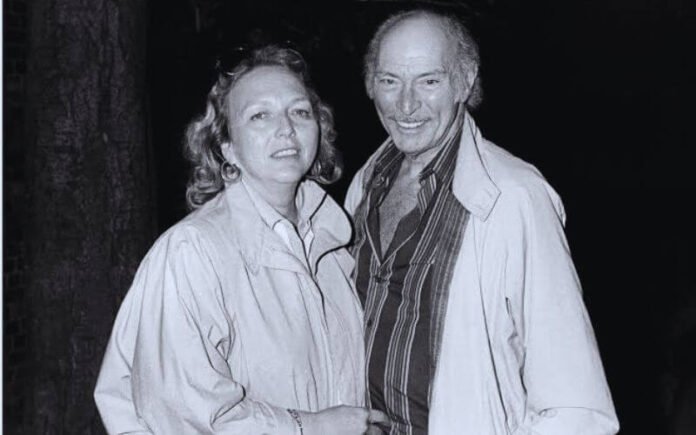
Her name shows up in celebrity genealogy databases and on IMDb, yet almost nothing has been written about her on her own terms. Barbara Havelone is one of those figures who exists at the edge of public record — visible enough to appear in searches, but private enough that reliable details are hard to come by.
This article covers what the documented record actually confirms: who Barbara Havelone was, her verified marriage to Lee Van Cleef, what entertainment records say about her, and the broader story of Van Cleef’s life and legacy that explains why her name still comes up today.
Who Barbara Havelone Was
Barbara Havelone is publicly identified as the widow of actor Lee Van Cleef. She is also listed under the name Barbara Van Cleef in entertainment records, and readers searching either name are most likely looking for the same person.
Her public recognition exists almost entirely because of her relationship with Van Cleef. That is not a criticism — it is simply what the record shows. She was not a household name in her own right, and the available reliable sources do not provide a verified birth date, birthplace, or detailed personal biography.
It is worth being honest about that gap. Several low-authority websites make specific claims about her background, birthplace, artistic career, and personal life. Those claims are not backed up by stronger sources, so they are not included here.
Her Marriage to Lee Van Cleef
Barbara and Lee Van Cleef married on July 13, 1976. Both MyHeritage and IMDb confirm this date, making it one of the most reliably documented facts about her.
The marriage lasted until Van Cleef’s death on December 16, 1989 — a span of roughly thirteen and a half years. She was his third and final wife, which means she was with him through the last chapter of his life and survived him as his widow.
It is important to note that Van Cleef’s known children came from his earlier marriages, not from his marriage to Barbara. Public records do not establish her as the mother of his children, and the article does not claim otherwise.
Barbara Havelone in Entertainment Records
IMDb does have a page for Barbara Havelone, listed under the identifier nm11618974. The page references limited acting and music-department credits, including what appears to be an uncredited piano-related entry.
That sparse listing should be read carefully. It does not establish a substantial acting career or a professional music career. It is a thin record, and drawing big conclusions from it would not be accurate.
The alternative name “Barbara Van Cleef” appears on the same IMDb page, which is useful context for anyone who has encountered both versions of her name and wondered whether they refer to the same person. They do, based on available sources.
One more note on names: some genealogy-oriented references use the spelling “Hevelone” rather than “Havelone.” The available sources do not conclusively confirm that every variant spelling refers to the same legal identity, so that distinction is flagged here rather than glossed over.
Lee Van Cleef’s Previous Marriages and Family Background
To understand Barbara’s place in Van Cleef’s life, it helps to know where she fit in his personal history. He had been married twice before her.
His first marriage was to Patsy Ruth Kahle. His second was to Joan Marjorie Drane. His known children were associated with his earlier marriages, not with Barbara.
When Barbara and Lee married in 1976, Van Cleef was already in his mid-forties and had been a recognizable screen presence for over two decades. She was there through what turned out to be the final stretch of his life, and she outlived him when he died in December 1989.
Lee Van Cleef’s Career and Why His Name Endures
Barbara Havelone appears in celebrity and genealogy databases for one primary reason: her husband remains a genuinely notable figure in film history. Understanding his career explains why her name still comes up decades after his death.
Lee Van Cleef was born on January 9, 1925, in Somerville, New Jersey. He broke into Hollywood during the early 1950s, often playing villains in Westerns. His sharp features — particularly his narrow eyes and angular face — made him instantly recognizable and well-suited to playing cold, calculating characters.
He appeared in High Noon (1952), one of the most celebrated Westerns in American film history, though his role was relatively small. Despite that early visibility, his Hollywood career stalled during the late 1950s and early 1960s, and he worked through a difficult period that included a serious car accident.
The turning point came when Italian director Sergio Leone cast him in For a Few Dollars More (1965). That film — part of Leone’s so-called Dollars Trilogy — gave Van Cleef a starring role rather than a supporting one. He played Colonel Douglas Mortimer, a bounty hunter, and the performance announced him as a leading man to international audiences.
The following year, Leone cast him again in The Good, the Bad and the Ugly (1966). Van Cleef played “Angel Eyes,” the cold-blooded villain of the title. The film became one of the most recognized Westerns ever made, and his performance in it is still discussed today.
Those two films alone secured his legacy. He went on to make dozens more films in Europe and the United States through the 1970s and 1980s, including the Sabata series and several action films. He also appeared in the television series The Master in 1984.
Van Cleef’s appeal had a lot to do with stillness. He did not overplay scenes. He brought a quiet menace to villain roles and a cool authority to hero roles, and that combination translated well across cultures and languages. His films found audiences in Italy, Spain, Germany, and beyond — not just in the United States.
He died on December 16, 1989, from a heart attack. He was 64 years old. By that point, he had worked steadily in film and television for nearly four decades, and his place in genre cinema history was already secure.
For readers who want to explore the wider world of celebrity profiles and public figures, Alice Business Mag covers a range of topics across entertainment and public life.
What Can and Cannot Be Said About Barbara Havelone
This is a good place to draw a clear line between what is confirmed and what is not.
What is confirmed:
- Barbara Havelone married Lee Van Cleef on July 13, 1976.
- She was his third and final wife.
- She survived him after his death on December 16, 1989.
- She is listed under the alternative name Barbara Van Cleef in entertainment records.
- IMDb includes a page for her with limited acting and music-department credits.
What is not confirmed by reliable sources:
- Her birth date or birthplace.
- Whether she had a substantial acting or music career.
- Whether she was the mother of any of Van Cleef’s children.
- Details about her life after Van Cleef’s death in 1989.
That second list is not a failure of research — it reflects the reality that many spouses of famous people live outside the public record. Barbara Havelone was not a public figure in her own right, and the documented record simply does not go much further than her marriage to Van Cleef.
A Final Note
Barbara Havelone’s name endures in databases and search results because she was connected to a man whose films are still watched and discussed today. That is not a small thing. Lee Van Cleef’s work in spaghetti Westerns left a genuine mark on cinema, and the people who shared his life are naturally part of the historical record.
What the record offers about Barbara is limited but clear: she was Lee Van Cleef’s wife for the last thirteen-plus years of his life, she survived him, and she is remembered — however quietly — as part of his story. Beyond that, the honest answer is that reliable public sources simply do not say much more.
And sometimes, that straightforward answer is more useful than a biography built on shaky claims.
Read Also: